We are here Venice contributes to Italy's National Nature Restoration Plan, drawing on WaterLANDS expertise
WahV contributes to Italy's National Nature Restoration Plan
We are here Venice (WahV) contributed to the official consultation process for Italy's Nature Restoration Plan, linked to the European Nature Restoration Regulation (EU) 2024/1991) to recover degraded ecosystems. It came into force in 2024 and seeks to combat biodiversity loss and climate change by setting legally binding targets to restore 20% of EU areas by 2030, and nearly all ecosystems requiring restoration by 2050.
The consultation, coordinated by the Ministry of Environment and Energy Security (MASE), invited stakeholders to propose or evaluate concrete restoration measures to be included in the national plan. ISPRA (the Italian Institute for Environmental Protection and Research) is supporting these activities.
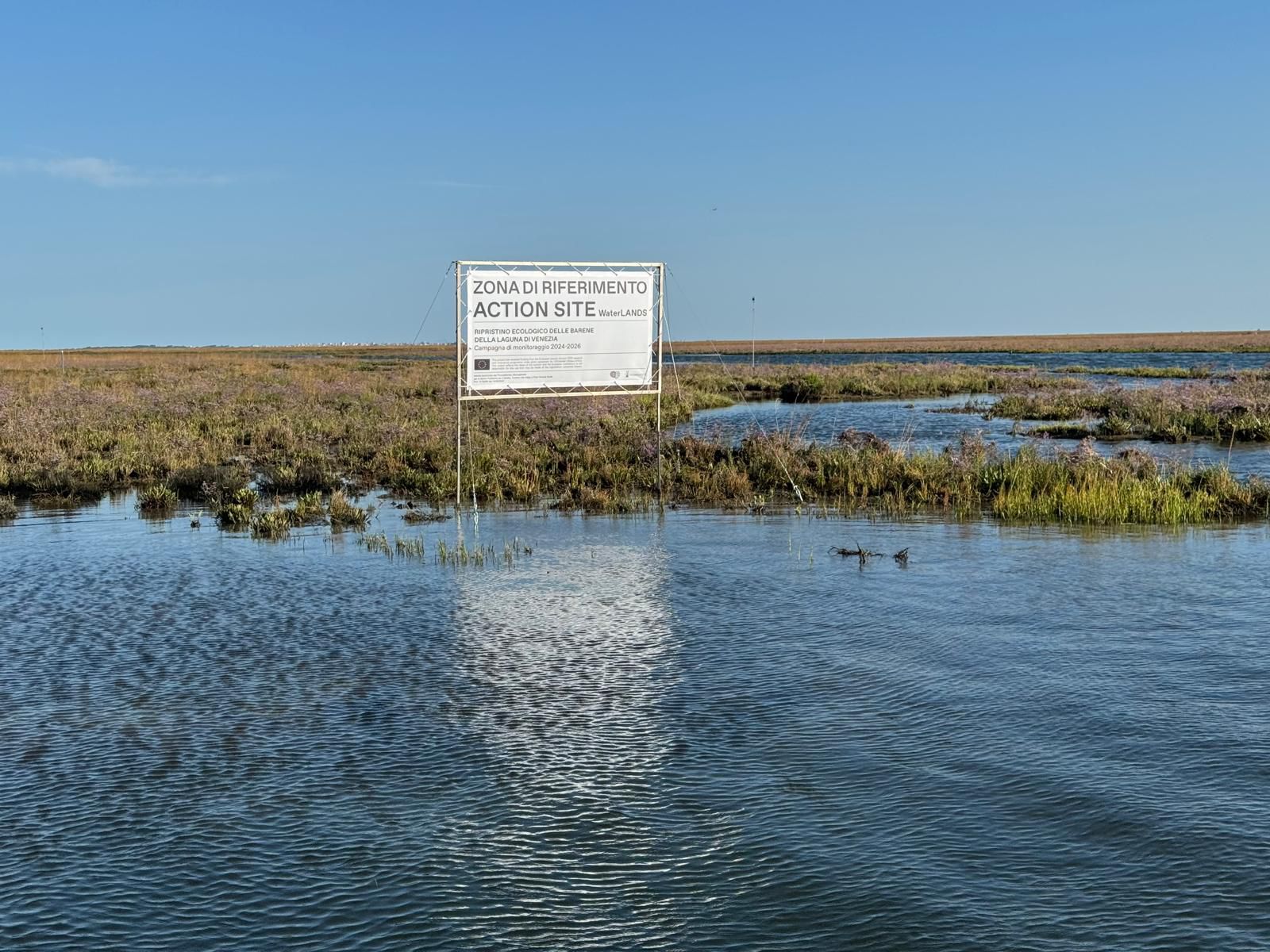
For WahV, this was an opportunity to introduce, at the level of national policy, the knowledge and on-the-ground experience built up over years of saltmarsh restoration work developed through the Horizon 2020 WaterLANDS project (G.A. 101036484). WahV has tested, monitored and refined nature-based approaches to repairing reconstructed saltmarsh in terms of ecological functionality, working in close consultation with the Autorità per la Laguna (ALV), the Autorità di Sistema Portuale del Mare Adriatico Settentrionale (AdSPMAS) and Regione Veneto and other key stakeholders. Specific reference to this work in the national Nature Restoration Plan will support ongoing efforts to attract the resources necessary for scaling up actions to improve the ecological status and total area of salt marsh – beginning with the central lagoon. WahV articulated two distinct recommendations under Article 4 of the Nature Restoration Regulation – restoration of terrestrial, coastal and freshwater ecosystems. The interested area is entirely within the Natura 2000 sites, according to the Habitats and Birds Directives. The specific measures are briefly described below.
Measure one: maintaining and improving existing reconstructed salt marsh
This measure focuses on deployment of nature based solutions to improve the morphology and limit erosion of the existing stock of reconstructed salt marsh. The measure responds to an issue evidenced by the WaterLANDS Actions Site: reconstructed salt marsh often lacks the morphological differentiation to support drainage, recirculation and associated development of vegetation cover and biodiversity essential for looking after itself - the distinguishing characteristic of natural marshes. Without active management it remains exposed to erosion, slow to develop tidal creeks (ghebi) that structure a healthy marsh, and risks limited vegetation cover and indicator species that are integral to ecological functionality. The central lagoon hosts a high concentration of reconstructed salt marsh that is vulnerable to erosion.
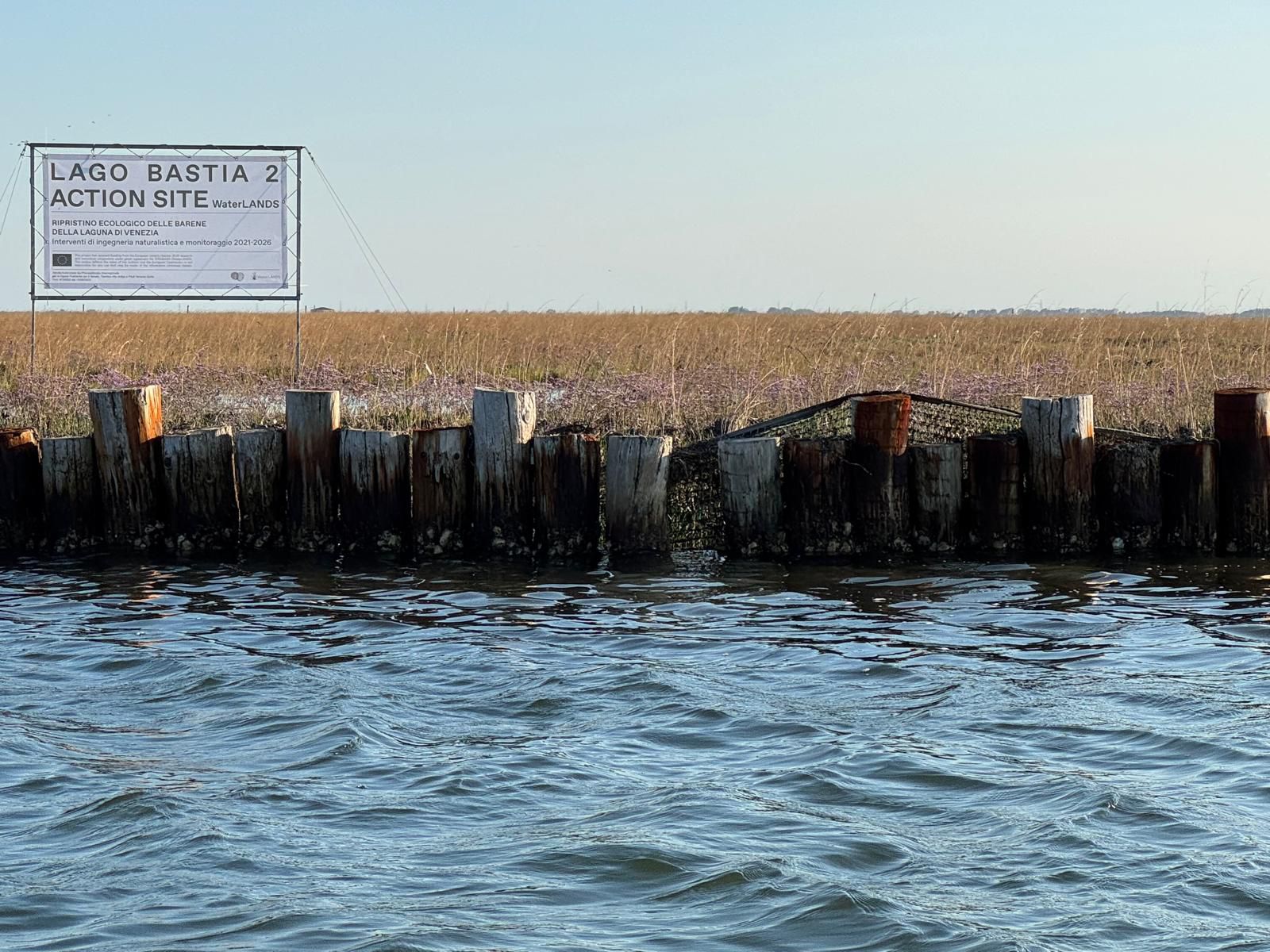
Building on the restoration toolkit developed through WaterLANDS, the measure proposes scaling up three complementary interventions: large-scale honeycomb style brushwood fascine structures to encourage sediment build-up and dampen wave and tidal energies along the exposed margins, carefully positioned openings cut into the poles with geotextile lining infill perimeter to trigger tidal channels to develop spontaneously and introduce greater diversity to the marsh morphology, and the propagation and planting of native halophyte seedlings, including Puccinellia festuciformis, Limonium narbonense, Juncus maritimus, Aster tripolium, Halimione portulacoides, Limbarda crithmoides and Salicornia species, grown from seed collected within the lagoon itself, to stabilise sediment and build resilience.
Underpinning all of this is a monitoring programme tracking selected morphological and ecological indicators against benchmarks drawn from research on natural saltmarsh. An adaptive management strategy is proposed as part of this measure to address sea-level rise and other climate impacts that are beyond the inherent resilience of marsh dynamics. Tools to support this are being developed by WaterLANDS, in consultation with the public authorities represented on the WaterLANDs Venice Action Sites steering committee. The measure is registered under typology NRPM_058 of the European Commission's Typology of Measures (“Restoring (improving and re-establishing) natural wetlands, other than peatlands”), and is listed as already under ongoing implementation, running from August 2024 through June 2032 across an estimated 3.5 km².
The measure carries a long target species list, from nesting and overwintering waterbirds such as the greater flamingo, spoonbill and avocet to the moths and other invertebrates associated with lagoon halophyte vegetation, underlining how much biodiversity also depends on the ecosystem health of reconstructed habitats.
Measure two: new, ecologically functional saltmarsh
The second measure proposed by WahV addresses the design approach for the creation of new reconstructed salt marsh across roughly 3 km² of the central Venice Lagoon, within the same Natura 2000 sites,. The measure involves reusing sediment from authorised dredging operations to compensate for the extensive loss of intertidal habitat in the lagoon over the past 100 years and the ecological potential of reconstructed salt marsh to improve the health of the lagoon system.
While artificial saltmarsh cannot fully replicate habitats formed over geological time, this measure, grounded in scientific research and expert knowledge, represents the opportunity for redesigned reconstructed saltmarsh combined with appropriate monitoring and maintenance, to support the lagoon and produce ecosystem services: carbon storage, improved water quality, fish productivity and attenuation of wave and current energy, all of which contribute both to the health of the lagoon and to the protection of Venice and its heritage.
The measure also sets out a financial pathway blending European funds, technical and scientific partnerships, corporate social responsibility contributions and philanthropy, reflecting WahV's broader ambition to make lagoon restoration not only ecologically robust but also financially sustainable over the long term, starting with optimised dredged sediment reuse agreed with the Port Authority.
Taken together, the two measures sketch a full cycle for lagoon saltmarsh restoration: keeping what has already been rebuilt alive, functional and resilient, and building new habitat where it has been lost, as the lagoon faces a changing climate.
Part of a wider movement for nature restoration
WahV's engagement in the Nature Restoration Plan consultation is not an isolated activity. WahV is a partner of IUCN, the International Union for Conservation of Nature, and a member of RIRE, the Italian Network for Ecosystem Restoration (Rete Italiana per il Ripristino Ecologico), which has been active in promoting and shaping the national debate around the implementation of the EU Nature Restoration Regulation. Through RIRE, WahV joins a growing community of Italian organisations advocating for ambitious, evidence-based restoration measures across the country's ecosystems.
By contributing concrete, field-tested measures to the PNR, WahV hopes to help ensure that the lessons learned in the Venice Lagoon, on cost-effective design, sediment reuse, adaptive monitoring and public-private collaboration, feed directly into national policy, supporting a more resilient and ecologically functional lagoon for the years to come.
Read more about WahV's restoration work in the Venice Lagoon and the WaterLANDS project at waterlands.eu.
Footnotes:
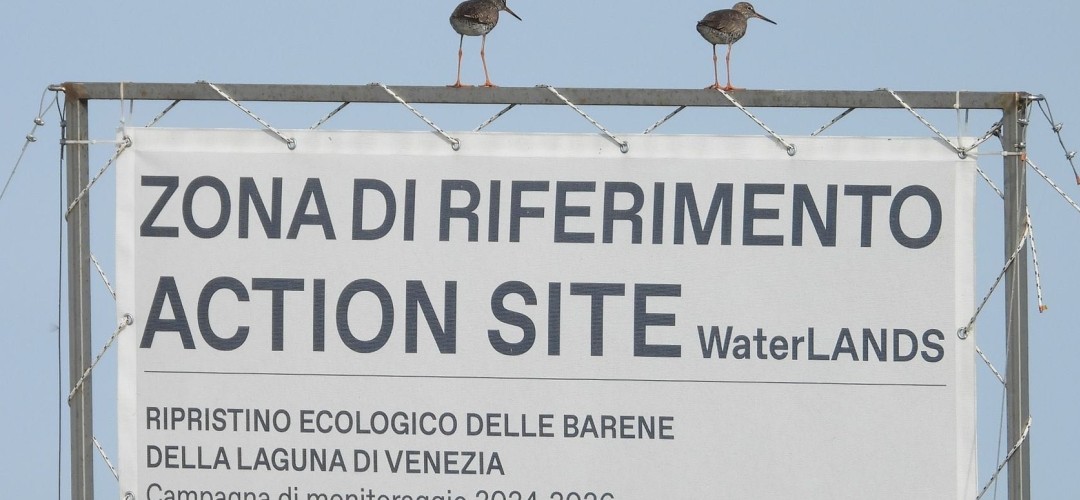
Cover image: WaterLANDS signage with two redshanks. Photo by Alessandro Sartori.
◾