Completion of the macro-structure of brushwood at the WaterLANDS action site
Completion of the macro-structure of brushwood
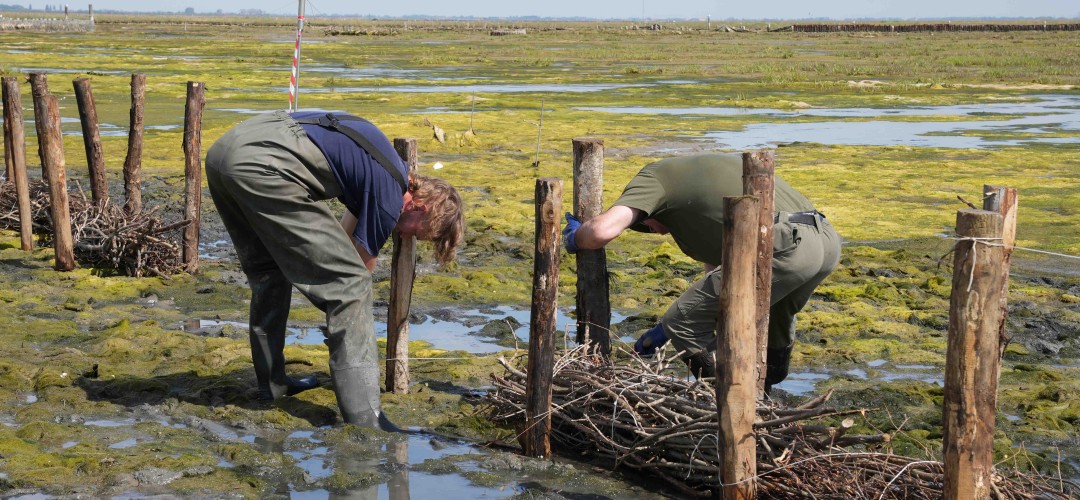
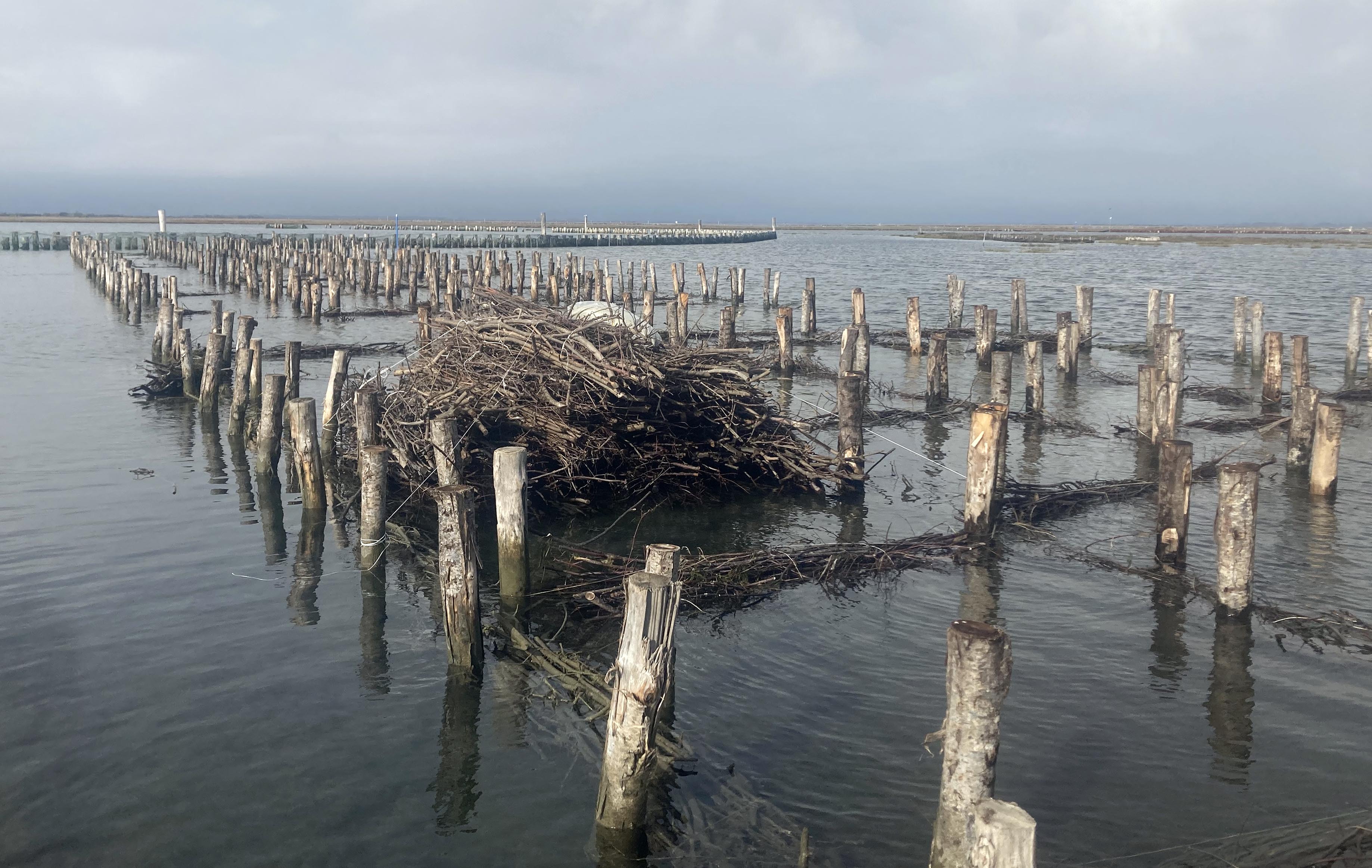
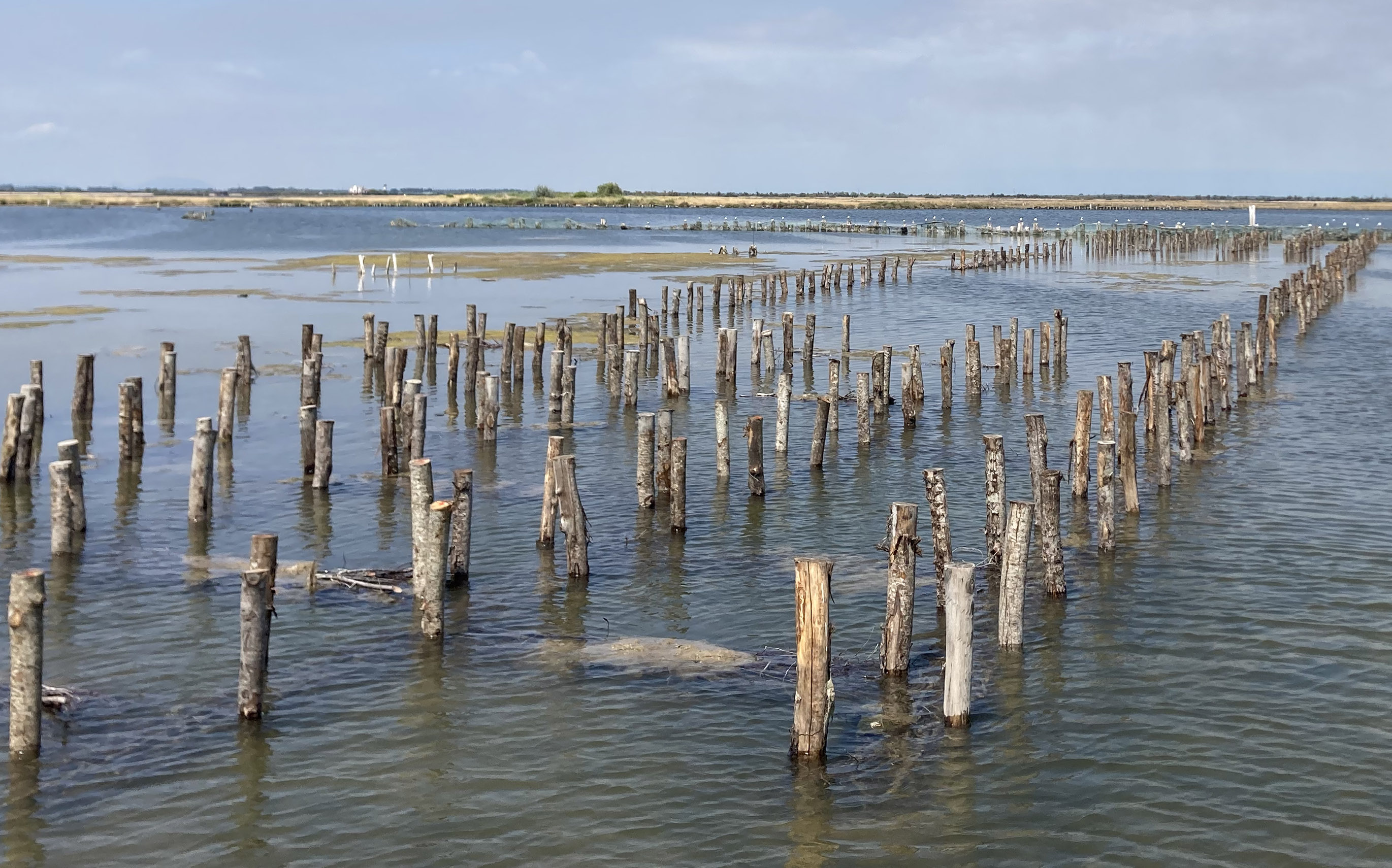
At one of the Venice Lagoon action sites, installation of the largest ever brushwood structure in the Venice Lagoon was completed in November. It covers the width of the most vulnerable area of the reconstructed marsh. Preliminary observations and wind and wave measurements suggest that energy and materials redistribution has significantly improved to facilitate accretion of sediments and expansion of vegetation cover, essentially reversing the tendency of these morphological infills to degrade and need replacing.
At least fifty infills in the same part of the central Venice lagoon could benefit from this type of nature-based intervention resulting in cost savings for the public authorities while offering ecological benefits for the lagoon of value for society, e.g. nature regeneration, water purification and CO2 sequestration.
After months of planning and preparation, WahV has worked with Nautilus to complete its most ambitious nature-based project to date. The installation covers an area of almost 1500m2 and adds both elevation and texture to the infill. This is expected to reduce the hydrodynamic forces of tidal currents and waves that cause erosion allowing the marsh to develop more robust geomorphology.
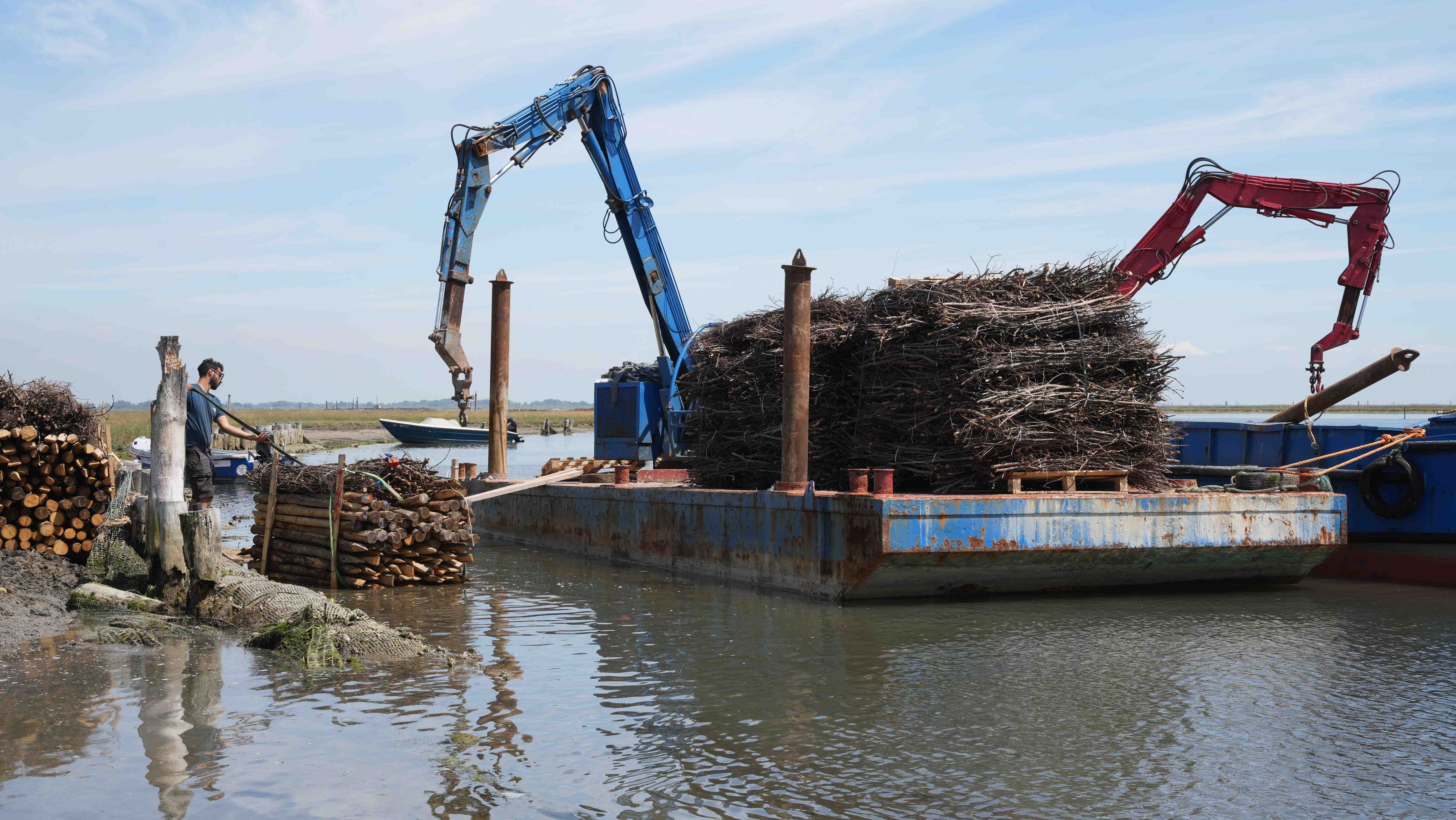
Branches were sourced from the hills around Vicenza and Verona (chestnut, hornbeam, walnut etc.) and the poles came from Tuscany. The work was carried out mostly by an expert team engaged by the contractor with the collaboration, at times, of field technicians from We are here Venice. A rainy spring season delayed the pole supply so installation could only begin in the early summer by which time it had become too hot to work after 1-2pm. Consequently the construction phase was much longer than anticipated as working hours had to coincide with lower tides as well.
The monitoring programme includes sensors to track sediment concentration in the water on either side of the honeycomb macrostructure, other sensors for wave energy, time lapse video as well as sediment characterisation, invertebrates and birds.
◾